



Globe Valve
Precise Flow Control and Reliable Shut-Off Solutions
Globe valves are linear motion valves designed for applications requiring accurate flow regulation, throttling control, and dependable shut-off performance.
With years of proven manufacturing experience and strict adherence to international standards such as ASME and API, we deliver reliable globe valves tailored to global industrial projects.

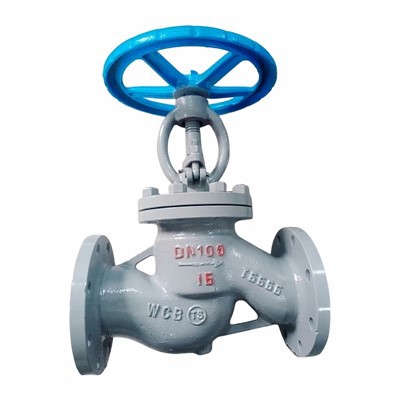
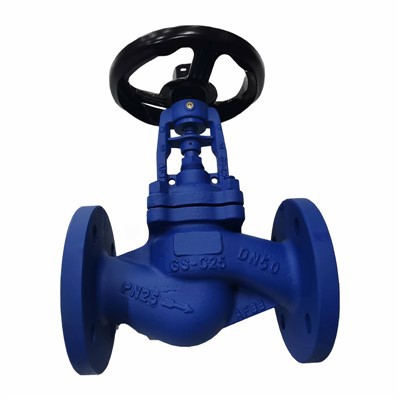

Product Overview: What Is a Globe Valve?
A globe valve controls fluid flow by moving a movable disc vertically against a fixed seat. This linear movement provides stable control characteristics and better flow adjustment capability compared with gate valves, making it ideal for systems where precise throttling is required.
Main internal components include:
• Valve body
• Bonnet
• Stem
• Disc
• Seat ring
• Packing system
• Handwheel or actuator
Although the internal flow path creates higher pressure loss compared with gate valves, it delivers significantly improved throttling performance and control accuracy. Because of this reliability and temperature resistance, these valves are widely used in steam systems, process pipelines, power plants, chemical plants, and industrial fluid control applications.
Available configurations include straight pattern, angle pattern, and Y-type designs with various materials, pressure ratings, and connection options to meet different operating conditions.

Straight Pattern Globe Valve
The most common globe valve design.
• Features: Straight inlet and outlet alignment, suitable for general industrial piping, easy installation and maintenance.
• Typical applications: Steam pipelines, process systems, water systems.
Angle Globe Valve
The inlet and outlet are positioned at a 90-degree angle.
• Advantages: Reduced pressure loss compared with standard globe valves, suitable for directional flow changes, compact piping layout.
• Applications: Boiler systems, high-pressure pipelines, drain and blowdown systems.
Y-Type Globe Valve
The seat and stem are positioned at an angle to reduce flow resistance.
• Advantages: Lower pressure drop, suitable for high-flow applications, improved efficiency under continuous operation.
• Applications: Power generation, chemical processing, industrial process systems.
Material Options
Material selection depends on media type, temperature, pressure, and corrosion requirements.
|
Material |
Typical Application |
|
Carbon Steel |
General industrial service |
|
Stainless Steel |
Corrosive or hygienic applications |
|
Cast Iron |
Low-pressure water systems |
|
Alloy Steel |
High temperature and pressure service |
|
Special Alloys |
Chemical and aggressive media |
Connection Options
Globe valves can be supplied with different end connections:
Flanged Globe Valve
Suitable for industrial pipelines, maintenance-friendly installation, and medium to large diameter systems.
Threaded Globe Valve
Suitable for small diameter piping and compact equipment systems.
Socket Weld Globe Valve
Used for high-pressure applications and compact process piping.
Butt Weld Globe Valve
Used for permanent pipeline installation and high-temperature systems.
Technical Specifications
|
Parameter |
Options & Details |
|
Valve Type |
Straight / Angle / Y-Type |
|
Size Range |
Customized according to requirements |
|
Pressure Class |
Class 150 / 300 / 600 / higher |
|
Body Material |
Carbon Steel / Stainless Steel / Alloy Steel |
|
Connection |
Flanged / Threaded / Welded |
|
Operation |
Manual / Pneumatic / Electric |
|
Medium |
Water / Steam / Oil / Gas / Chemicals |
|
Temperature Range |
According to material selection |
Casting and Forging: Valve bodies are produced through suitable casting or forging processes according to pressure requirements and material specifications with strict material verification and quality inspection.
CNC Machining: Precision machining ensures accurate seat alignment, proper sealing performance, and stable valve operation.
Assembly: Includes component inspection, stem installation, packing installation, and functional checking.
Pressure Testing: Each valve requires testing procedures to verify shell strength, seat sealing performance, and leakage control.
Quality Inspection
Material Inspection
Chemical composition analysis, material certificate verification, and traceability control.
Dimensional Inspection
Checking valve dimensions, connection accuracy, and machining tolerances.
Pressure Testing
Testing includes hydrostatic shell tests and seat leakage tests.
Applications
Steam Systems
Widely used for steam flow regulation because of their throttling capability and temperature resistance.
01
Power Generation
Applications include boiler systems, feedwater systems, and cooling systems.
02
Chemical Processing
Suitable for controlled flow of process fluids, chemicals, and industrial liquids.
03
Oil and Gas
Used in pipeline systems, processing equipment, and utility systems.
04
Water Treatment
Applications include pump systems, filtration systems, and distribution pipelines.
05
Globe Valve Selection Guide
Before selecting a globe valve, buyers should confirm:
Medium Characteristics
Consider fluid type, corrosiveness, viscosity, and solid particles.
Operating Conditions
Confirm working pressure, temperature, and flow rate.
Valve Material
Material selection should match chemical compatibility, temperature requirements, and service environment.
Valve Design
Choose straight pattern for general use, angle type for space limitation, and Y-type for lower pressure loss.

Engineering-Based Product Selection: Valve configuration is selected according to working conditions, media characteristics, and pressure requirements.
Controlled Manufacturing Process: Production focuses on material verification, precision machining, assembly accuracy, and pressure testing.
Flexible Supply Capability: Available options include different materials, various pressure classes, multiple connection standards, and customized configurations.
Technical Documents Available: Product drawings, technical datasheets, material certificates, inspection reports, pressure test records, and quality documents can be provided according to project needs.
Frequently Asked Questions