



Gate Valve
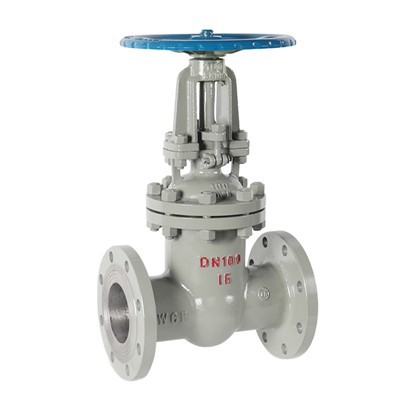
Product Overview: What Is a Gate Valve?
Gate valves are utilized as reliable isolation components in pipeline systems where complete shut-off and minimal flow resistance are required. They are widely applied in water transmission, oil and gas, chemical processing, power generation, and industrial piping systems.
Available configurations include wedge gate valves, rising stem gate valves, non-rising stem gate valves, resilient seated gate valves, and metal seated gate valves, offering material options for diverse pressure, temperature, and media conditions.

Core Mechanical Operation
When fully open
The gate moves completely away from the flow path, pressure loss is minimized, and pipeline flow remains almost unrestricted.
When fully closed
The gate provides a tight, bubble-tight shut-off, allowing the pipeline section to be securely isolated for operation or maintenance.
Application Note
Gate valves are typically selected for applications requiring strict on/off isolation rather than flow regulation.
Wedge Gate Valve: Uses a wedge-shaped gate that provides robust sealing between the gate and valve seats.
• Applications: Oil pipelines, water systems, industrial process lines, power plants.
• Advantages: Simple structure, reliable shut-off performance, suitable for high-pressure systems.
Rising Stem Gate Valve: The stem moves upward when the valve opens, providing a clear visual and physical indication of the valve position.
• Applications: Above-ground pipelines, industrial facilities, maintenance-accessible installations.
• Benefits: Easy operation monitoring, convenient maintenance inspection.
Non-Rising Stem Gate Valve: The stem rotates in place without vertical movement.
• Applications: Underground pipelines, limited installation spaces, buried valve chambers.
• Benefits: Compact installation height, ideal for underground and restricted environments.

Resilient Seated Gate Valve: Uses an elastomer-coated gate for enhanced, bubble-tight sealing performance.
• Applications: Water supply, municipal pipelines, fire protection systems.
• Features: Low operating torque, reduced leakage risk, suitable for clean and potable water applications.
Metal Seated Gate Valve: Utilizes precision metal-to-metal sealing components.
• Applications: High-temperature systems, industrial processes, steam and utility pipelines.
• Features: High temperature resistance, durable sealing structure for aggressive media.
Key Selection Parameters
|
Parameter Category |
Standard Options & Specifications |
Selection Consideration |
|
Valve Size |
DN15 – DN1200+ / NPS 1/2" – 48"+ |
Depends on pipeline diameter, flow capacity, and installation requirements. |
|
Pressure Rating |
PN10, PN16, PN25, PN40, Class 150, Class 300, Class 600 |
Must match exact pipeline operating pressure and safety margins. |
|
Body Materials |
Cast Iron, Ductile Iron, Carbon Steel, Stainless Steel, Alloy Steel |
Selected based on fluid type, temperature, and corrosion conditions. |
|
Seat Materials |
EPDM, NBR, PTFE, Metal-to-Metal |
Matched to media compatibility and temperature limits. |
|
Stem Materials |
Stainless Steel, Carbon Steel with corrosion-resistant coating |
Chosen for mechanical strength and environmental resistance. |
|
Connection Types |
Flanged End, Threaded End, Socket Weld End, Butt Weld End |
Determined by pipeline design, installation method, and industry standards. |
Manufacturing and Quality Control
Material Control
Incoming material verification, chemical composition inspection, mechanical property testing, and full traceability management.
Machining Process
Advanced CNC machining centers ensure accurate sealing surfaces, strict dimensional tolerances, and stable valve performance.
Assembly and Testing
Each valve undergoes rigorous shell pressure testing, seat leakage testing, functional operation testing, and dimensional inspection in compliance with international standards (certified to ISO 9001, API 6D, and CE/PED).
Application Industries
Water Treatment and Distribution: Water transmission pipelines, pump stations, municipal systems (commonly utilizing resilient seated gate valves).
Oil and Gas: Crude oil pipelines, gas transmission systems, processing facilities (requiring high pressure ratings and compliant alloy materials).
Chemical Processing: Chemical pipelines, process isolation systems (focusing on corrosion resistance and precise material compatibility).
Power Generation: Cooling water systems, steam auxiliary systems, utility pipelines (focusing on high-temperature resistance and pressure capability).
How to Choose the Right Gate Valve
Medium Type
Confirm the fluid passing through the pipeline (water, steam, oil, gas, chemical liquid).
Operating Conditions
Define working pressure, working temperature, flow medium, and installation environment.
Valve Standard
Specify governing standards such as API, ASME, ANSI, DIN, EN, or JIS.
Operation Method
Choose based on application needs (handwheel for manual isolation, gear operator for large diameters, pneumatic or electric actuators for automated/remote systems).
Engineering Capability: Professional technical support for valve selection, material recommendation, drawing confirmation, and comprehensive technical documentation.
Manufacturing Capability: Stable high-volume production processes, advanced CNC machining lines, rigorous quality inspection systems, and complete production traceability.
Documentation Support: Full provision of product drawings, material certificates (EN 10204 3.1), inspection reports, pressure test records, and technical datasheets.
Customization and Delivery: Flexible manufacturing for custom specifications, low minimum order quantities (MOQ), OEM/ODM support, and reliable lead times for global shipping.
FAQ