



Check Valve
Product Overview & Working Principle
Check valves provide automatic flow control by allowing fluid movement in one direction while preventing reverse flow. They are installed in pipelines where backflow protection, equipment safety, and system reliability are critical. Available in multiple configurations including swing, wafer, dual plate, lift, and spring-loaded designs, they can be selected according to pressure requirements, installation conditions, media characteristics, and operating temperature.
A check valve operates through pressure differences and internal components rather than external control:
Opening: When upstream pressure exceeds downstream pressure, the valve opens to allow smooth flow.
Closing: When flow reverses, the disc, plate, or piston closes tightly against the seat to prevent backflow.
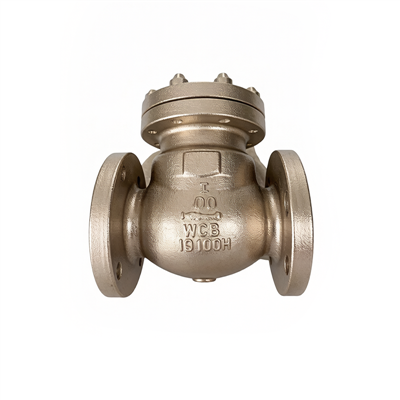
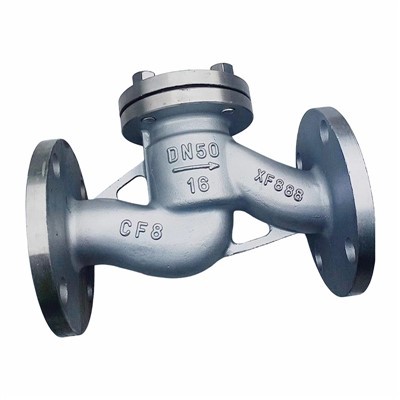

Check Valve Types
Swing Check Valve
• Suitable for: Large diameter pipelines, low to medium velocity flow systems, water, oil, and general industrial applications.
• Features: Simple structure, low pressure drop, full flow passage, suitable for horizontal installation.
Wafer Check Valve
• Suitable for: Space-limited piping systems, HVAC systems, water treatment equipment.
• Features: Compact wafer design, lightweight construction, easy installation between flanges, reduced installation space.
Dual Plate Check Valve
• Suitable for: High-cycle applications, pump systems, industrial pipelines requiring fast closing.
• Features: Low inertia disc design, reduced water hammer risk, lower pressure loss, compact structure.
Lift Check Valve
• Suitable for: High-pressure applications, steam and process pipelines.
• Features: Reliable sealing, high pressure capability, suitable for demanding operating conditions.
Technical Specifications
|
Item |
Specification Range |
|
Valve Size |
DN15 to DN1200 / NPS 1/2 inch to 48 inch |
|
Pressure Rating |
Class 150 to 2500 / PN10 to PN420 |
|
Body Materials |
Cast Iron, Ductile Iron, Carbon Steel, Stainless Steel, Alloy Steel |
|
Seat Materials |
EPDM, NBR, PTFE, Metal Seat |
|
Connection |
Wafer, Flanged, Threaded, Butt Weld |
|
Temperature Range |
Depends on material selection |
|
Media |
Water, Oil, Gas, Steam, Chemical Fluids |

Carbon Steel Check Valve
• Recommended for: Oil pipelines, industrial water systems, general process applications.
• Advantages: High mechanical strength, suitable for higher pressure applications.
Stainless Steel Check Valve
• Recommended for: Corrosive fluids, chemical processing, food and pharmaceutical industries.
• Advantages: Better corrosion resistance, suitable for hygienic applications.
Ductile Iron Check Valve
• Recommended for: Water supply, municipal systems, HVAC applications.
• Advantages: Cost-effective, good mechanical performance, suitable for large diameter valves.
Selection Guide for Buyers
Before selecting a check valve, confirm the following aspects:
Fluid Information
Liquid or gas, chemical compatibility, viscosity, solid particles, and corrosion conditions.
Operating Conditions
Working pressure, maximum temperature, flow rate, and pressure fluctuations.
Installation Requirements
Pipeline direction, horizontal or vertical installation, available space, and maintenance requirements.
Connection Standards
ANSI Class flange, DIN PN flange, JIS flange, threaded connection, and butt weld connection.
A reliable check valve supplier should control the complete production process and maintain strict international standards:
International Standards & Certifications: Compliance with major industry frameworks including ISO 9001 quality management systems, API 6D specifications, and CE/PED directives for global project compliance.
Material Control: Raw material verification, chemical composition testing, mechanical property testing, and heat treatment records.
Machining Process: CNC machining of valve body and internal components, precision sealing surface machining, dimensional inspection, and assembly control.
Assembly and Testing: Shell pressure test, seat leakage test, functional testing, dimensional inspection, and visual inspection.
Quality Control Documentation: Material certificates, pressure test reports, inspection records, dimensional reports, and traceability documentation.

Applications by Industry
Water Treatment: Pump protection, water distribution systems, filtration equipment.
Oil and Gas: Pipeline protection, compressor systems, process equipment.
Chemical Industry: Corrosive media handling, process pipelines, chemical transfer systems.
HVAC and Building Systems: Cooling water circulation, heating systems, pump protection.
Frequently Asked Questions